SONGS OF APOLLO


Welcome to "Songs of Apollo," a documentary series that delves into the unique relationship between space exploration and music. Uncover how the vastness of space has inspired musical creativity and how music has played a vital role in space missions.

Join us as we discover the fascinating interplay between art and science. Through extensive research and interviews, "Songs of Apollo" reveals the profound impact of space exploration on music and popular culture.

Prepare to be captivated by stories that harmonize music and the cosmos, showcasing how the arts have inspired and supported the exploration of space.

Stay tuned for an extraordinary journey through sound and space.

Please share your space music stories in the contact section!
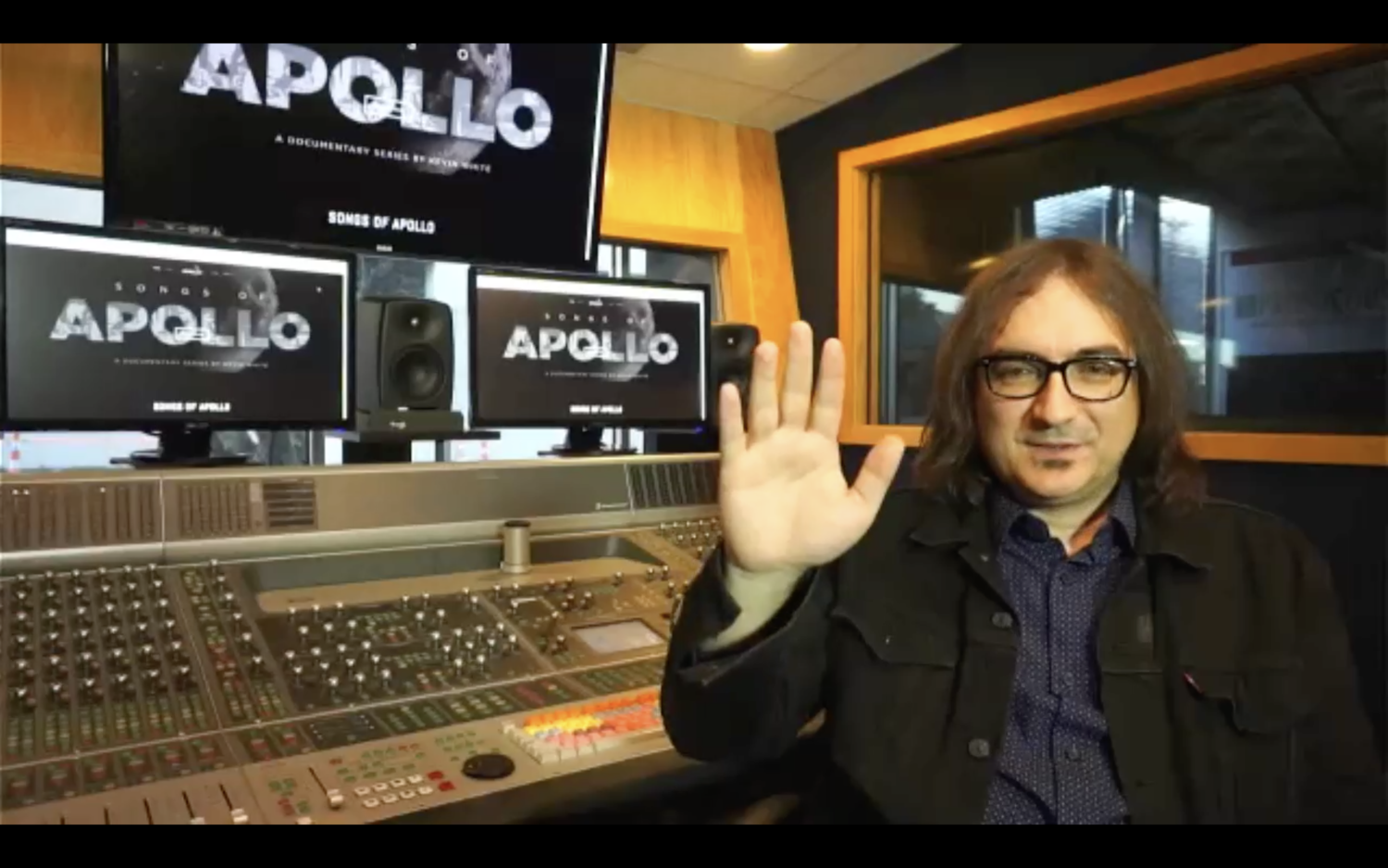
 

Kevin White is a Nashville-based filmmaker, audio engineer, and preeminent astromusicologist whose work defines the intersection of sound and space history. A Telly Award winner and voting member of the National Academy of Recording Arts & Sciences (the GRAMMYs), Kevin has provided critical research and contributions to NASA’s Apollo Flight Journal, documenting the sonic landscape of humanity’s lunar voyages.

As the director of Songs of Apollo, he utilizes his deep expertise in analog audio and musicology to preserve the lost acoustic archives of the Space Race. When not behind a console or a camera, he is an active musician deeply rooted in the surf and 12-string guitar traditions. His career is dedicated to the idea that the history of exploration is incomplete without the history of its soundtrack.


From rock arenas to rocket launches, "Concert to Cosmos: The Acoustic Evolution of MSI-DFAT" is a featurette from the Songs of Apollo series, that follows the groundbreaking work of a sound company that reshaped spaceflight testing. Using powerful loudspeakers to expose spacecraft to extreme acoustic forces, MSI revolutionized Direct Field Acoustic Testing. Drawing on years of experience working with legendary musicians (Pink Floyd David Bowie), they transformed their mastery of sound into a critical technology for space exploration, bridging creativity and science in an unexpected way.

The upcoming series "Songs of Apollo" originated in 2019 through a space industry-funded internship initiative to honor the Apollo 11 50th Anniversary Celebration. Initially, Kevin White was assigned to explore the connections between Nashville's rich musical heritage and the Apollo space program. Through extensive research and interviews, he revealed a fascinating, ongoing interplay between art and science, highlighting how music and the cosmos have influenced each other throughout human history.

What does space sound like, and what did we bring to listen to when we finally reached it? Songs of Apollo is a documentary that charts the unexpected marriage of music and space exploration, a relationship that began long before rockets left the atmosphere, when humans relied on song to map the stars.

The film traces this acoustic journey from the early synthesizers of the Atomic Age to the "astro-musicology" of the Moon missions. At its core, the documentary features a unique exchange of perspectives: legendary astronauts share the deeply personal sonic memories of their voyages, while visionary musicians reflect on how the vastness of the cosmos has shaped their creative obsession.

From the technical challenges of astronaut life under the roar of life support systems to the strange physics of sound across the void, Songs of Apollo investigates how humanity used music to maintain a vital connection to home. It is a cinematic study of the people and the playlists that harmonized with the silence of the cosmos.

News & Updates

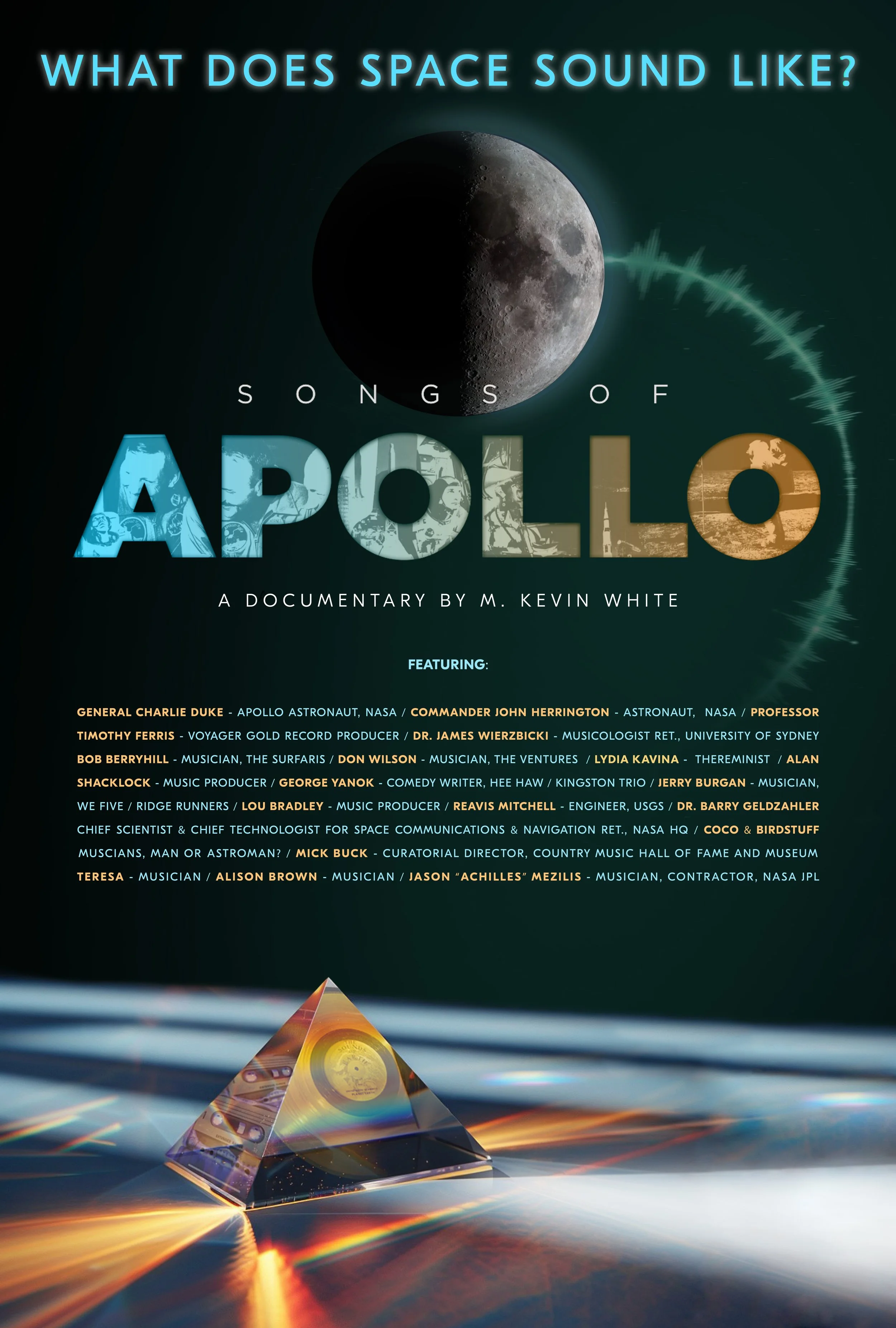
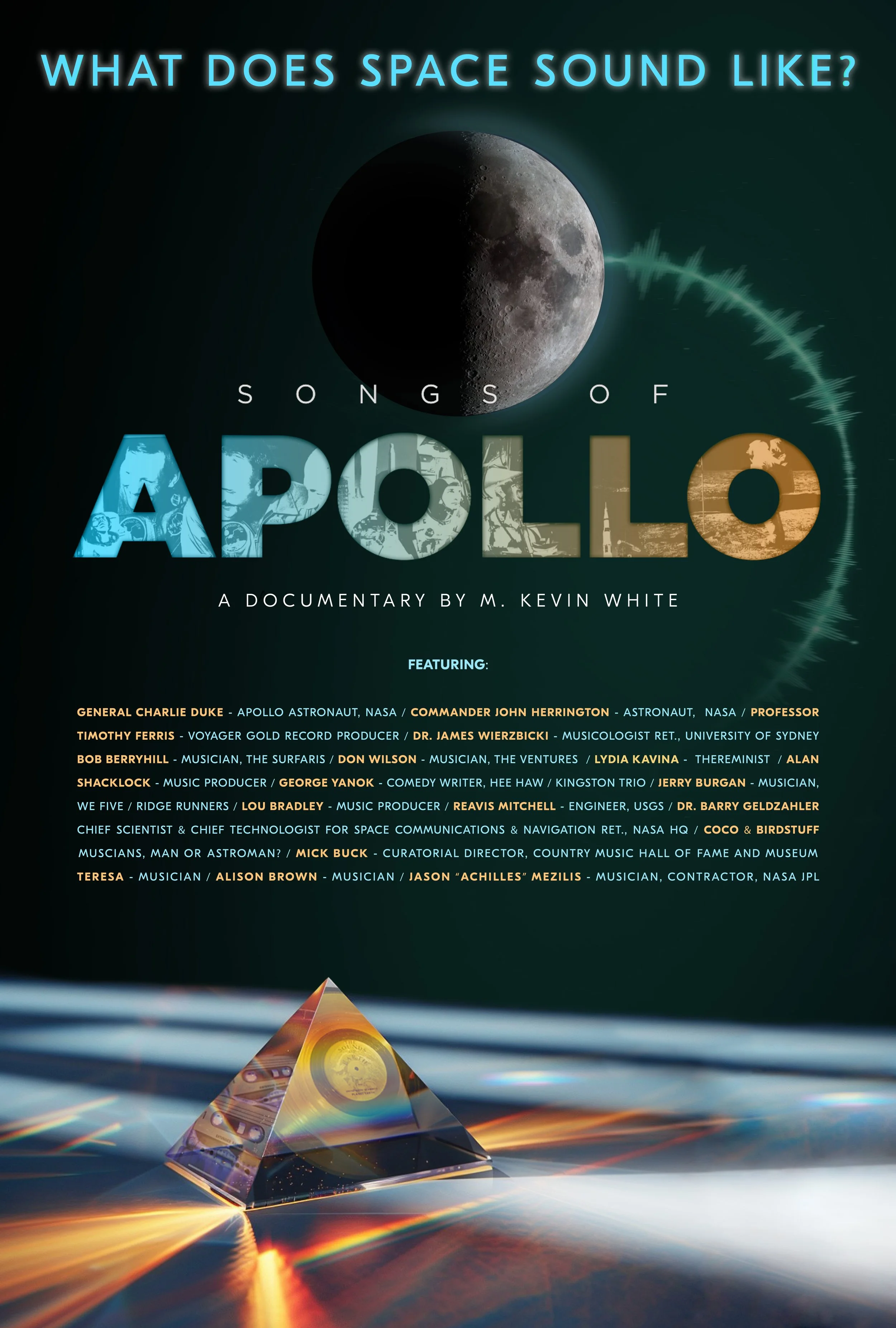
April 7th, 2026 The trailer for the full length feature documentary “Songs of Apollo” is now available!. Stay tuned for information on film festival screenings and check out this new poster by the talented Lauren Stewart!


April 11th, 2025 is release day for our first Songs of Apollo Featurette “CONCERT TO COSMOS: The Acoustic Evolution of MSI-DFAT.” Learn how a live sound company evolved from rock arenas to rocket launches. Using powerful loudspeakers to expose spacecraft to extreme acoustic forces, MSI revolutionized Direct Field Acoustic Testing. Drawing on years of experience working with legendary musicians (Pink Floyd, David Bowie), they transformed their mastery of sound into a critical technology for space exploration, bridging creativity and science in an unexpected way.

March 2025, This month has brought a lot of new activity into the Songs of Apollo project. Roadtrips to Detroit, Dayton, Baltimore and Washington DC have produced a lot of great footage and stories.

Pal Molnar, Sonus Engineering

In Detroit Pal Molnar from Sonus Engineering Uses his expertise in mechanical engineering and acoustics to reduce the noise of spacecraft including the upcoming Halo Gateway space habitat.

Bob Goldstein from MSI-DFAT, Pink Floyd to NASA

In Baltimore the team at MSI-DFAT provided a ton of great insight into the ways that they turned their concert sound expertise in to new field of acousic testing for NASA.


July 20, 2020, Happy Moon Landing Day! It’s been a year since Songs of Apollo premiered at the Adventure Science Center’s Apollo 11 50th Anniversary Celebration. We are looking forward to starting production on the full length documentary in January 2021.


Adventure Science Center premier for the Apollo 11 50th Anniversary Celebration.

Adventure Science Center premier for the Apollo 11 50th Anniversary Celebration.

 In this special "Songs of Apollo" sneak peak, we learn about the work that Pal Molnar from Sonus Engineered Solutions does to reduce the noise generated in space habitats. He even reveals how his work crosses over with the tech that we use in the music industry. Thanks to MSI - DFAT SERVICES, LLC for the introduction!

"In this sneak peek of Songs of Apollo, engineer and musician Reavis Mitchell explores the profound impact of the space program on the evolution of music—from funk and prog rock to techno and early hip-hop—while highlighting its significance in shaping Afrofuturism."